

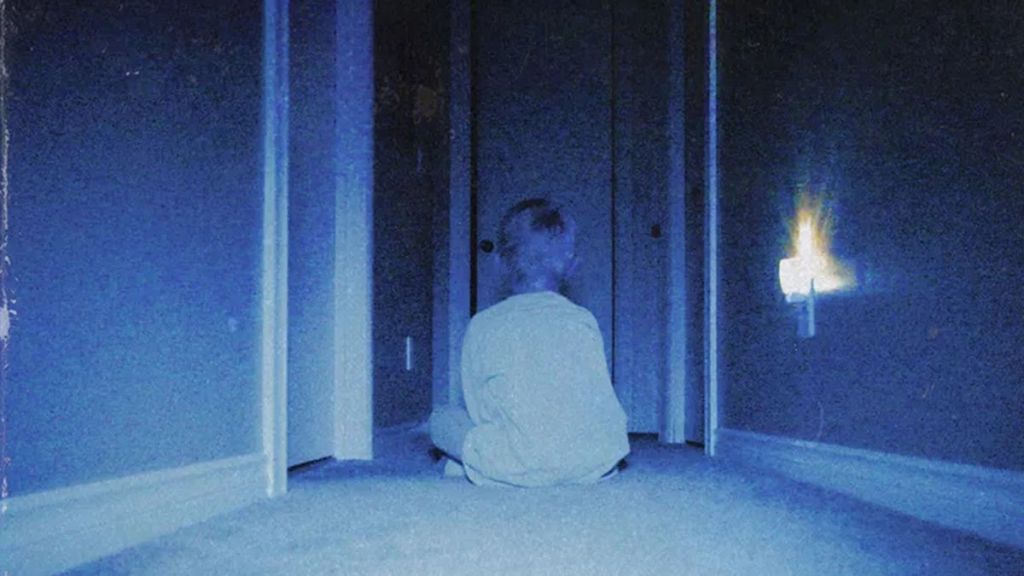
20 | Skinamarink
Without a doubt, the most divisive horror film of 2023, but also its most interesting, taking a new approach to scaring its audience to a feature-length extreme. Soaked in the fuzziness of VHS tape, Skinamarink focuses on the innocent nostalgia of childhood before subjecting the our child stand-ins to an unnameable and undefinable horror. Instead of a persistent boogeyman, we’re plagued by only the briefest flashes of horror with few jumpscares to accentuate the rather uneventful shots of a home’s architecture, building blocks, and public domain cartoons. Kyle Edward Ball is keenly aware that he could never represent the more frightening monster to his audience visually or sonically, instead Skinamarink prepares a canvas for its viewer and asks them to fill in the worst thing they can think of. Admittedly, it’s a tall request for an audience, but watching it in a darkened room, you just might find yourself looking a little deeper into the dark corners, searching for a terror that you pray isn’t there. – N.A.
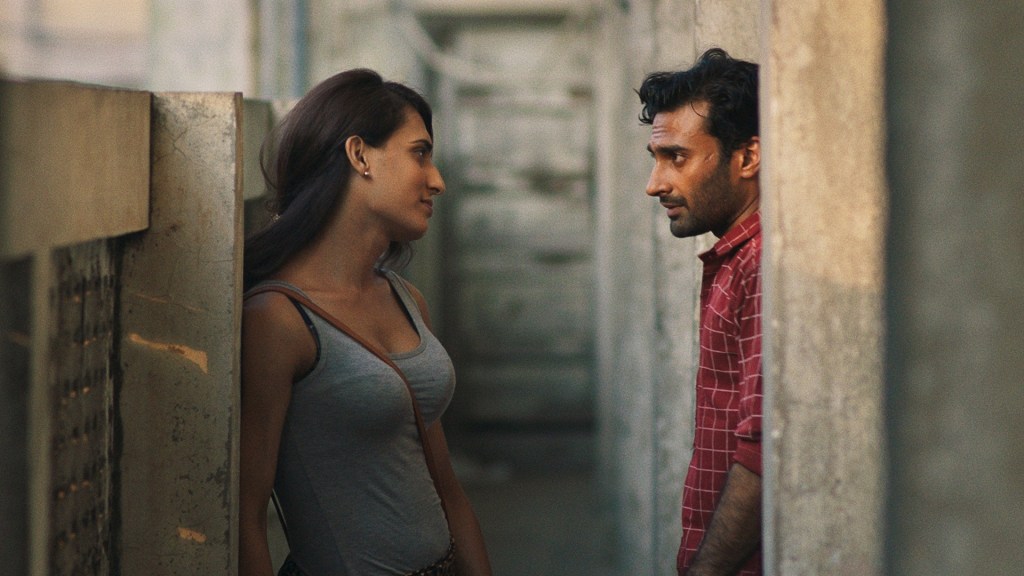
19 | Joyland
A heartbreaking picture that frankly should be higher on this list, Saim Sadiq’s Joyland is as great as movies get. A film that shows the horrors of patriarchy and havoc of cultural/religious repression that damns everyone. Ambitious in its structure and bold in its choice to not pull away from the horror, Joyland will go down as one of the great films of this century and its placement on this list will haunt my colleagues and their families as they look back on their decision to rank this film above Blackberry, a fine film that will be remembered by people with neckbeards and zero-sugar Monster Energy t shirts. -C.W.

18 | Master Gardener
Paul Schrader returns with the most underrated, politically challenging film of the year. Featuring career best performances from Joel Edgerton, Sigourney Weaver, and Quintessa Swindell, Schrader has crafted a powerful character study on modern age romance and if love prevails against hate. Never has Schrader before found such poetic balance in violence and beauty than in Master Gardener, and his ending here is as beautiful as any moment of his career. -C.W.
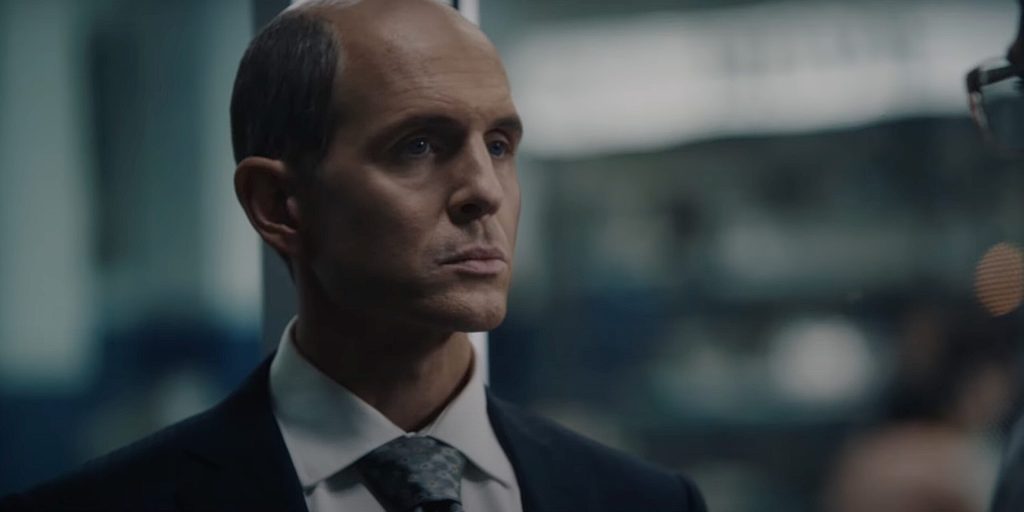
17 | Blackberry
2023 was undoubtedly the year for corporate product biopics, but what separates the bevy of glorified ads for chips, shoes, plushies, and everything else from Blackberry, is that there was a very clear winner in the race for cell phone supremacy, and I can just about guarantee you aren’t reading this list on a BlackBerry. Filmed in that all too familiar shaky-cam mockumentary style, BlackBerry boils down to the story of a fledgling tech company who didn’t know how to sell their ingenious technology, thus bringing in a soulless corporate executive to rocket them to the top. Glenn Howerton is captivating to watch as the greedy cutthroat, unafraid to go for the jugular in a stinging comment or icy look, playing well against the respectively timid and nerdy inventors found in Jay Baruchel and Matt Johnson. There’s something to be said for so clearly documenting the fall of BlackBerry as well as its rise that makes this such a refreshing watch. In place of product propaganda, we’re treated to a prescient tale of foolishly believing in one’s unsinkable product as the end-all be-all, even when the next revolution is right-around the corner, even if it doesn’t have a keyboard with that distinctive BlackBerry click. -N.A.
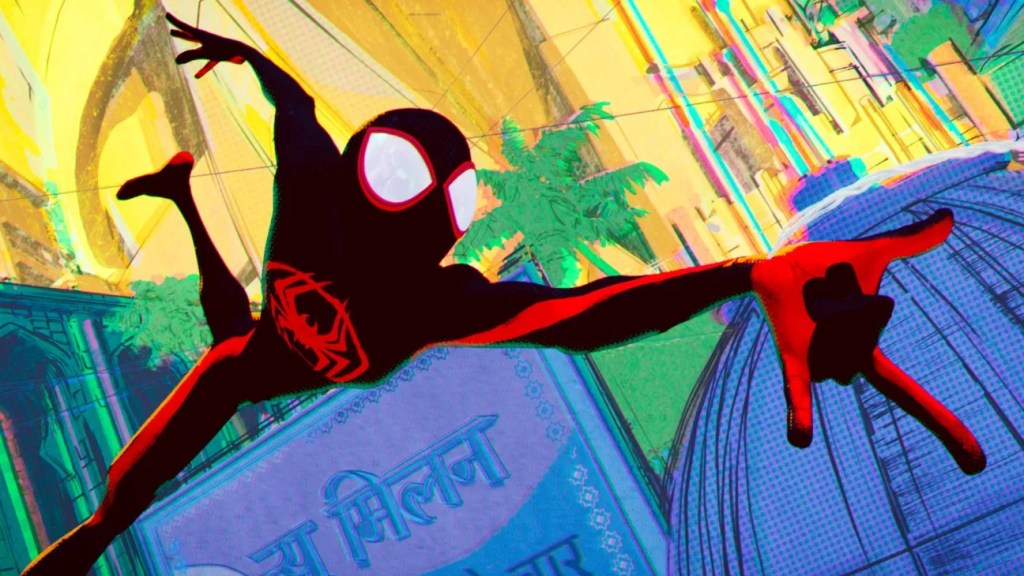
16 | Spider-Man: Across the Spider-Verse
There were enough slings and arrows preceding the release of the second installment of the Spider-Verse trilogy. First the mere fact that it was a sequel. Another that it was another part of Marvel’s endless churn. And, of course, there were the usual racist, misogynist, and other assorted spindly creeps that would seek to assault any concession towards diversity. Yet, this film proved not only a triumph commercially but an artistic coup that built upon the successes of the first. Into The Spider-Verse, though visually spectacular, had a humdrum plotting that spoke to the worst instincts in comic book storytelling. Here we build on the strengths of the medium: a multiplicity of narration, both visual and character-driven. What the visual artists do unfortunately bears credence to their slavish work conditions, such is their achievement. Even that most banal of criticisms, that it’s only half a story, is negated by the simple fact that it’s pop art baby! -J.S.

15 | Godzilla Minus One
Godzilla fans who have been craving a return to basics were rewarded this year with an incarnation that’s just as destructive as his first appearance in 1954. Set in post-war Japan, where day-to-day survival is hard enough without a multi-ton nuclear dinosaur decimating the already beaten-down population, survivors must come together to both figure out how to stop the kaiju and confront their role in the war. Godzilla standing in for the imperialist altar on which young men were sacrificed during Japan’s war effort hits all the right notes for a moving reflection on the costs associated with the quest for power and who really ends up footing the bill in the end. Of course, this emotional core would be all for naught without a truly terrifying creature and ample opportunities to show it off, such as a loving nod to the boat climax from Jaws (not to mention a young, agile Godzilla appearing in the film’s opening). We can only hope that this year’s forthcoming team-up with King Kong is this effective. -N.A.
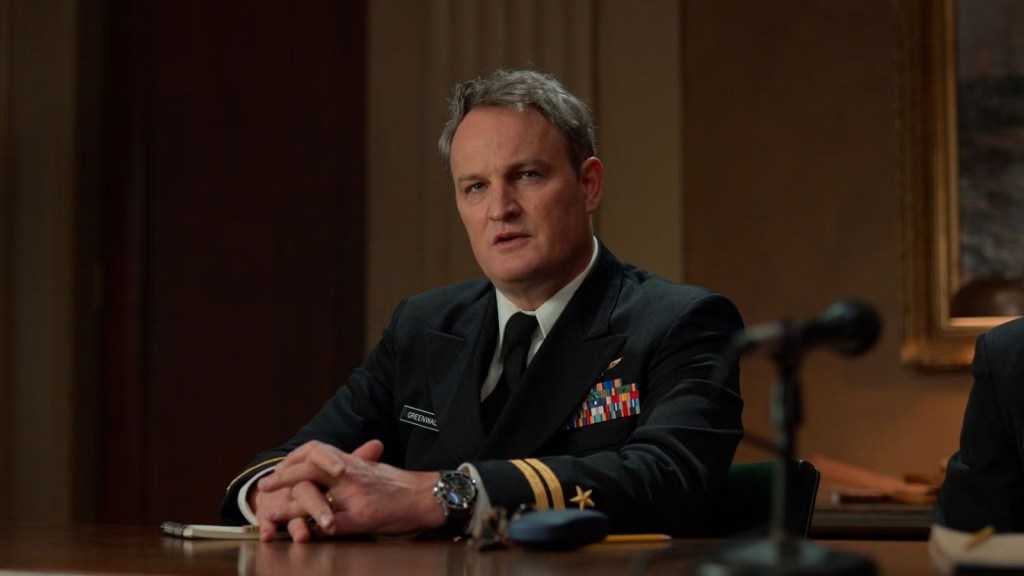
14 | The Caine Mutiny Court-Martial
It is fitting that William Friedkin’s swan song would bring him back to one of his eternal loves: the theatrical play. The Caine Mutiny Court Martial is a highly calibrated, fine-tuned work of art that Friedkin, shrewdly, does not stand in the way of or augment with ostentatious cinematic tricks. Obviously, he could have given his proclivity towards extreme stylism in films such as Sorcerer, To Live and Die in L.A., and The Exorcist. Instead, he wisely lets the text speak for itself and the uniformly superb actors deliver its cadences with resounding perfection. Jason Clarke, who to broader audiences fulfilled a similar role in Oppenheimer, performs here at an even higher echelon of latent moral authority as does our favorite torturer-in-chief on the boobtube, Kiefer Sutherland, giving a career-best performance as a military man more content with martial routine than the strictures of ordinary life. Other fine turns abound, from Jay Duplass, unrecognizable as a pivotal witness, and Lance Reddick whose work here constitutes a much more worthy tribute of his innate authority than his limited screen time in John Wick: Chapter 4. – J.S.
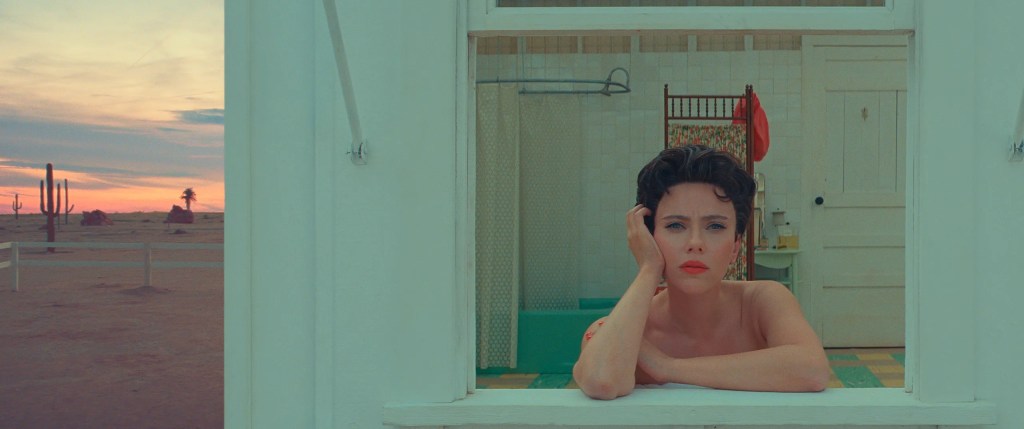
13 | Asteroid City
After spending a few years on the precipice of self-parody, Wes Anderson returned this year with one of his very best films to date – a head-spinning Matryoshka doll of a film, blending his usual knack for ennui-tinged hilarity with a Tati-esque mastery of intricate set design and spatial awareness. Anderson’s approaches to camera movement and shot composition are outrageously bold and inventive, but they were in The French Dispatch, too, and that one didn’t do a whole lot for me. Here Anderson manages to blend his hyper-specific stylistics with a legitimately moving story of loss, grief, and the utility of art in processing said emotions. The climactic scene between Jason Schwartzman and Margot Robbie (her finest moment onscreen this year, without question) is as moving as any moment in the Anderson filmography. – R.J.

12 | May December
Todd Haynes dresses down the casual psychopathy of Hollywood in what may well come to be considered his masterpiece. The sweaty haze of Savannah, Georgia provides the perfect hothouse atmosphere for this gleefully sordid, funny-if-it-wasn’t-so-nauseating tale; Portman, Moore, and the deservedly well-awarded Charles Melton are all revelatory here, and newcomer Samy Burch’s script ranks among the most prickly and memorable of recent years. – R.J.

11 | Priscilla
The guiding aesthetic principle of Sofia Coppola’s latest installment in female ennui is dead time. Rather than the presence of Elvis (something that was captured so baroquely by Baz Luhrmann’s 2022 film), it is his absence, his spectre that haunts so much of Priscilla. In his stead, we have Cailee Spaeny wandering an empty Graceland, an image worthy of Antonioni. When the King’s onscreen, as portrayed by, if not an latter-day analogue to Elvis (perhaps Bobby Vee?) Jacob Elordi, he is a symbolist: masculine force in all of its alternate charm, bravado and toxicity. Their doomed commingling though, is more than a simple battle of the sexes. Such a limited reading would be past the still-hip Coppola; there are dynamics of power, intellect, and history at work. And if not solved by the film’s finale, they are at least ameliorated by that most awesome, in the biblical sense, of parting paeans: “I Will Always Love You.” -J.S.
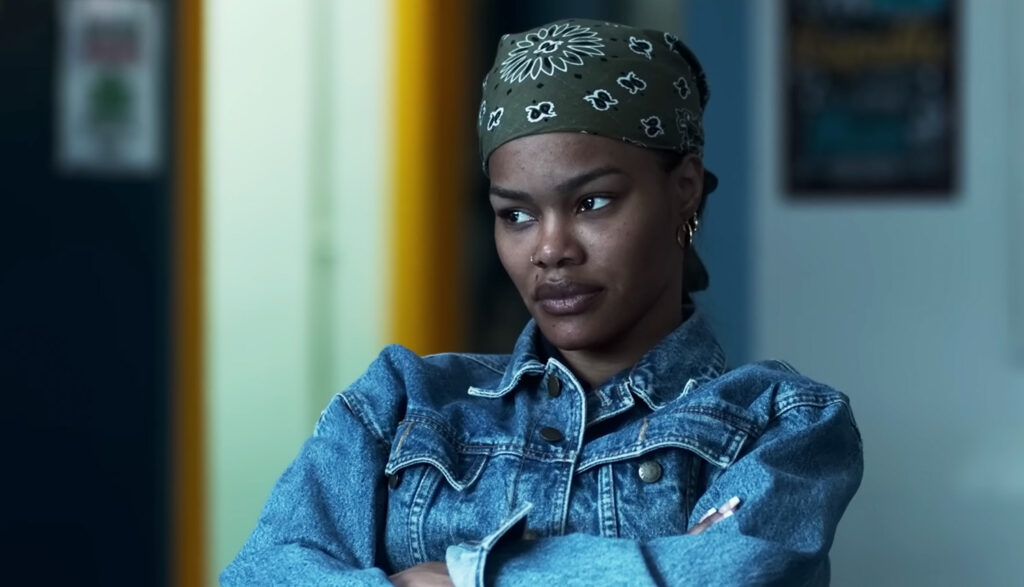
10 | A Thousand and One
One of the best debuts I’ve ever seen, there are a thousand and one reasons why you should seek out A.G. Rockwell’s beautiful A Thousand and One. With Teyana Taylor delivering the year’s most emotional performance and an ending that goes toe to toe with any classic Douglas Sirk picture – this is a masterpiece, folks! – C.W.
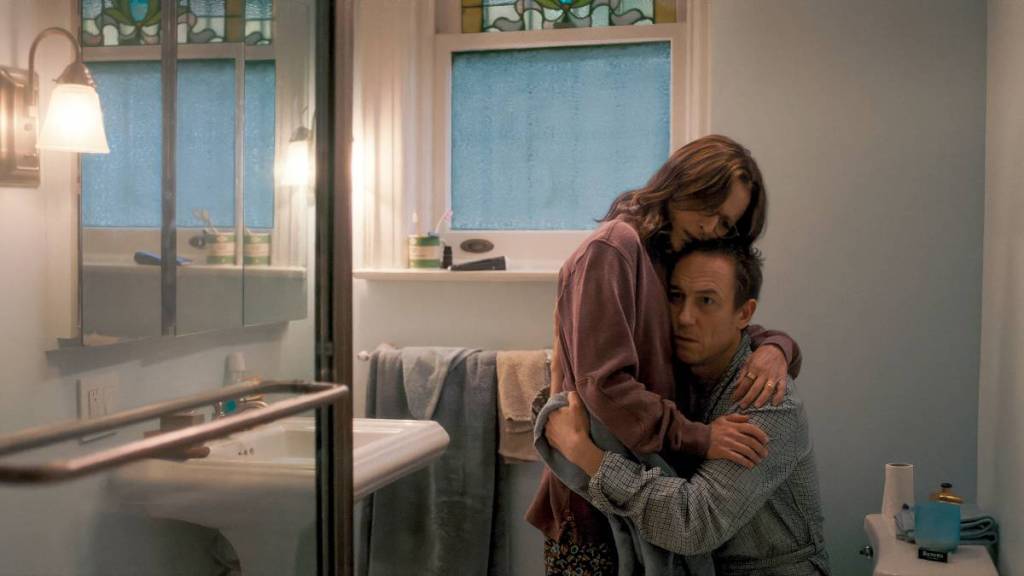
9 | You Hurt My Feelings
Nicole Holofcener and Julia Louis-Dreyfus reteam for perhaps the most entertaining films of the year with You Hurt My Feelings. While not reaching the emotional heights as Holofcener’s The Land of Steady Habits, her latest tale of spousal criticism is as clever and genuinely funny as any film Holofcener has made yet. Featuring remarkable performances by Dreyfus and Tobias Menzies, You Hurt My Feelings is the sweet romantic New York City picture that rarely gets made anymore. Here’s hoping Dreyfus and Holofcener continue their lovely collaboration. – C.W.
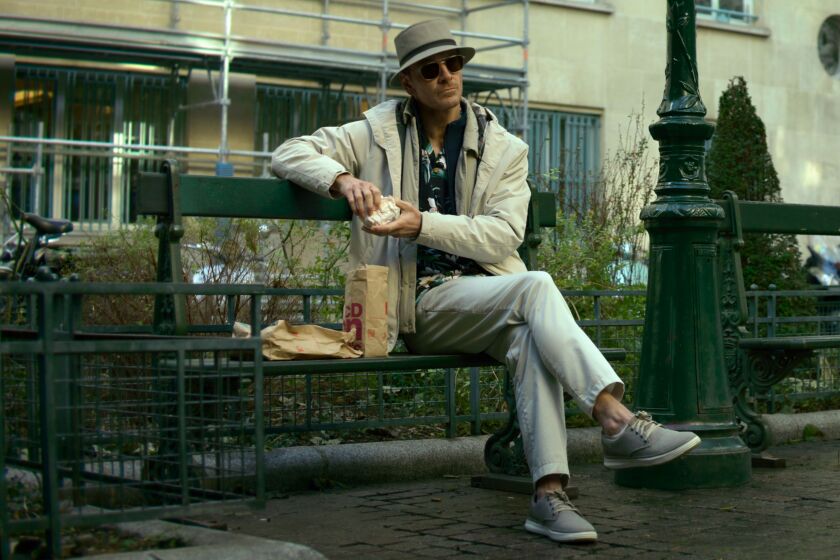
8 | The Killer
I overheard a coworker disparage this film as “80% narration” earlier this week, but my god, doesn’t that make for an engagingly fresh way to stage an action film? David Fincher’s portrait of contract killing in the gig economy is a deliciously efficient joy ride, a triumph of sound design and consistently inventive digital cinematography. A sublime theatrical experience unfortunately dumped on Netflix, The Killer features one of the finest (and funniest) Michael Fassbender performances in ages as he drolly expounds upon his titular assassin’s laughable #grindset philosophies. And if you find yourself rolling your eyes at Fincher’s maybe-a-bit-too-cheeky monologues, might I direct you to the central action set-piece – a lengthy, riveting hand-to-hand brawl that utilizes onscreen darkness in a way I can’t quite recall ever seeing before. – R.J.
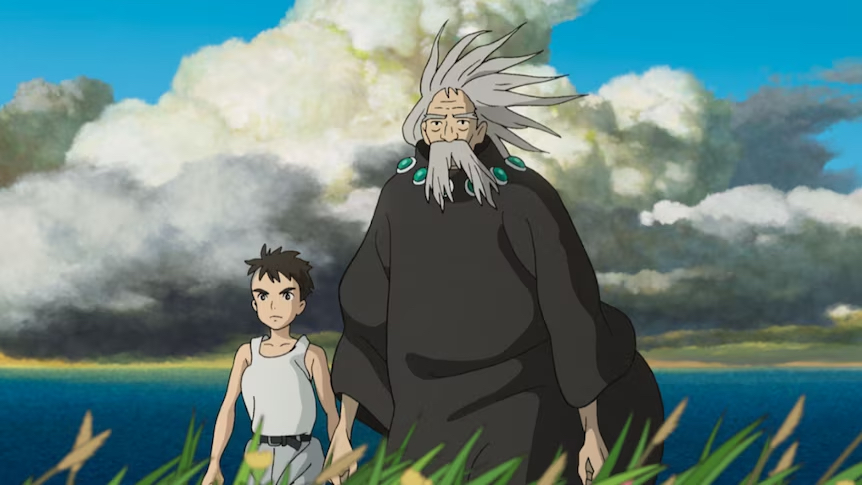
7 | The Boy and the Heron
Alongside Alfred Hitchcock’s The Birds and Clint Eastwood’s Sully, Hayao Miyazaki’s The Boy and the Heron has joined the short list of masterful films featuring misbehaving birds. Never has the fowl creature been this mischievous! Miyazaki’s latest is a triumph in animation and a profound study on loss and grief with a beautiful heart at its center. We can’t recommend this picture enough and can only hope Miyazaki never retires . . . – C.W.
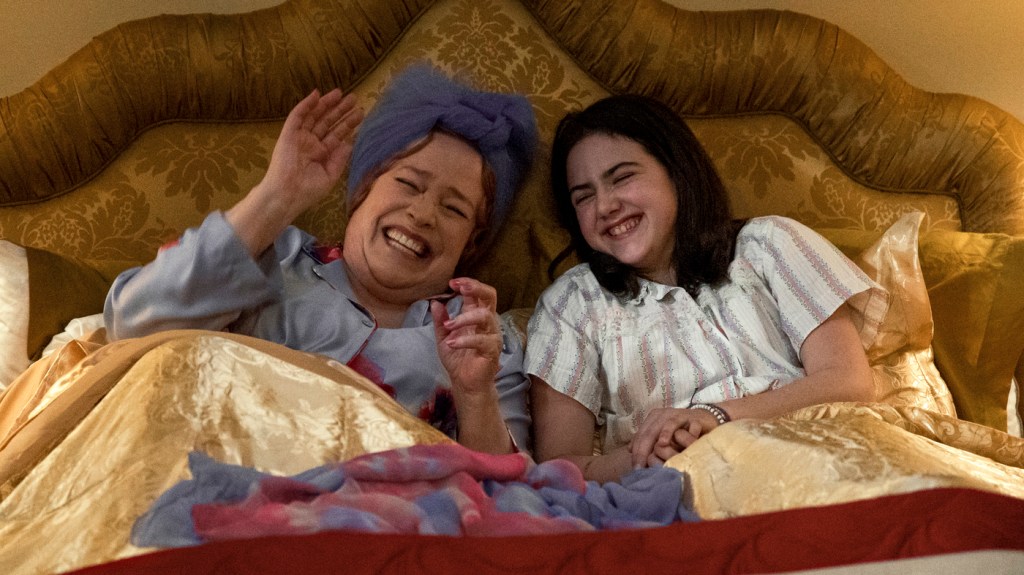
6 | Are You There God? It’s Me, Margaret.
On paper, a 2023 screen adaptation of Judy Blume’s legendary coming-of-age tome sounds like a textbook piece of IP-milking multiplex fluff. Instead, Kelly Fremon Craig took the assignment and ran with it, delivering one of the most moving and memorable family films in years – a hilarious and startlingly specific portrait of preteen girlhood. The religious themes at the heart of the source material remain thankfully intact; I can’t think of many (if any?) other middle-school movies that grapple so seriously (and successfully) with issues of religious belief and burgeoning sexuality. Couple that with a scenery-milking Kathy Bates performance for the ages, and you’ve got one of the most delightful films of the decade so far. – R.J.

5 | The Holdovers
After the commercial and critical failure of his swing-for-the-fences sci-fi opus Downsizing, it seems Alexander Payne decided it was time to go back to basics – a wistful dramedy in which a curmudgeonly middle-aged man reflects on his life, goes on a trip of some kind, and learns a few lessons along the way. The Holdovers, however, just might be the apotheosis of this well-worn formula. Paul Giamatti’s performance as Paul Hunham ranks among his very best work to date; much like the film itself, Paul is a very familiar archetype, but Giamatti’s guileless presence, flawless comedic timing, and stubbornly indefatigable sense of dignity coalesce to create one of the year’s most memorable screen characters. But Da’Vine Joy Randolph (promising in Dolemite Is My Name, downright undeniable here) and newcomer Dominic Sessa give equally stellar performances, striking in their specificity and lived-in ease. Payne does his performers a great service as well, framing and blocking his scenes with a warm and refreshingly loose recreation of New Hollywood’s muted, fuzzy aesthetic. By the time he’s taken a leisurely ten minutes to set the emotional scene by unfurling his opening credits over a procession of lonesome, wintry establishing shots (none of which contain the characters you’re about to spend two hours with), you know you’re in good hands. At least, I knew I was. – R.J.
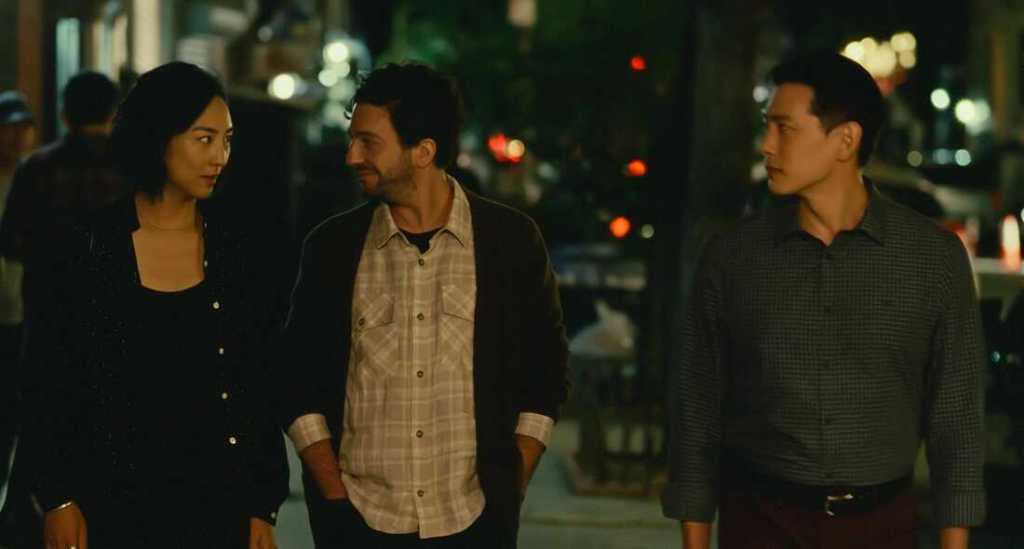
4 | Past Lives
There’s a quiet sadness that pervades Celine Song’s debut Past Lives that somehow combines the straightforward with the profound. Questions abound as Song interrogates the role of destiny in shaping our lives and how our own paths in life could get in the way of our relationships. The story follows two childhood friends separated at early adolescence, each carrying a flicker of what might have been into adulthood, even as they go about with their own lives. The eventual meeting between the two dredges up these past feelings, each emotion and realization clearly coming across thanks to standout performances from Greta Lee and Teo Yoo. By the film’s heartbreaking final conversations, there’s a clear understanding that while our pasts are certain and our fates may twist and turn in the wind, we can live in hope. -N.A.
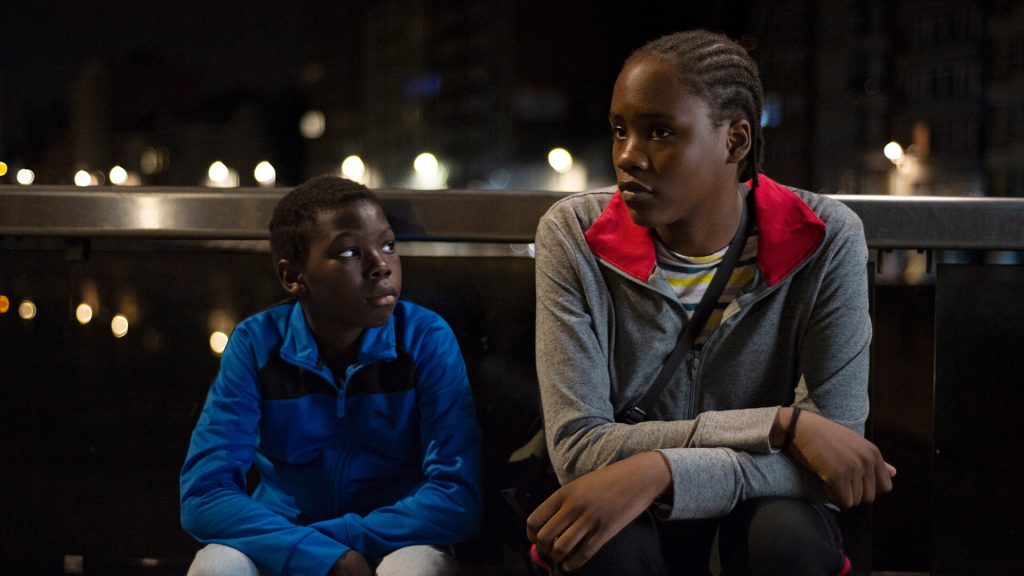
3 | Tori and Lokita
It is unlikely for most people privileged (in both the colloquial and real sense of the word) to have watched the latest masterpiece from the Dardenne brothers to really identify with the titular characters. Oh, sure, we do in the sense of commiserating with their aspirations in the same way there is audience identification with Rick Blaine when he gives up love for the greater good and we simultaneously hold the delusion that either, “I would do the same” or “I would hope to do the same.” No, the Dardenne brothers in their sociopolitical concerns, posit that we are instead another character, minor in terms of screen time but major in terms of potential impact. It is a driver who passes Tori and Lokita near the end of the film. That’s who we are. – J.S.
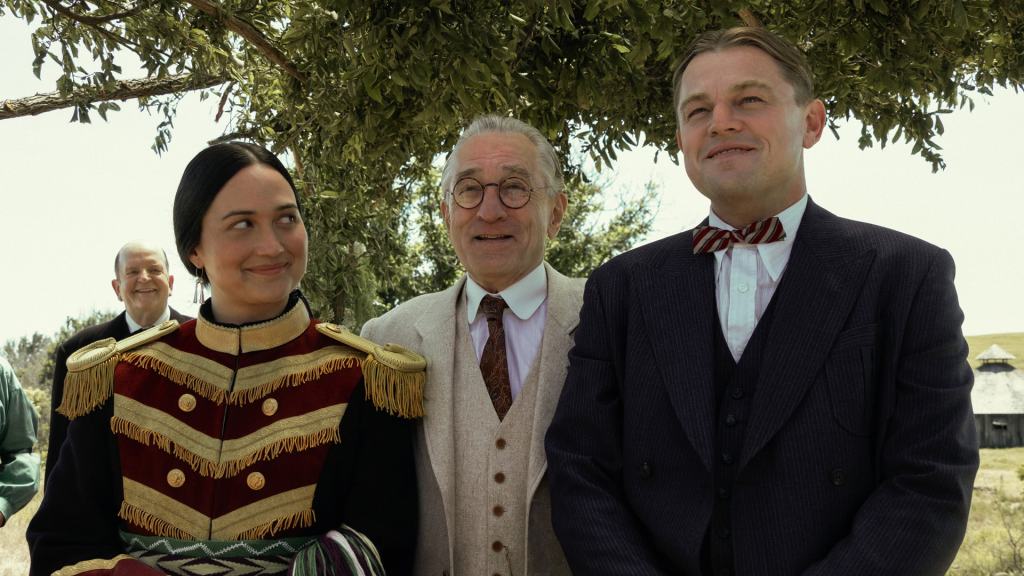
2 | Killers of the Flower Moon
The year’s most heartbreaking film comes in the form of an 81 year old master exploring the inherent evil found in white man’s greed; Killers of the Flower Moon is a remarkable achievement in filmmaking and will no doubt be remembered as one of Martin Scorsese’s greatest films. Scorsese’s adoration of Hollywood masters John Ford, George Stevens, and King Vidor seeps through the film’s visual style with stunning images of the Oklahoma countryside. Leonardo DIcaprio embodies the essence of stupidity with both horror and charm in a performance that ranks among the best of his career. Lily Gladstone’s portrayal of Mollie Kyle grounds the film in a realism unprecedented for Scorsese, her final scene with Dicaprio ranks as the most impressive piece of acting this viewer has seen in 2023. – C.W.
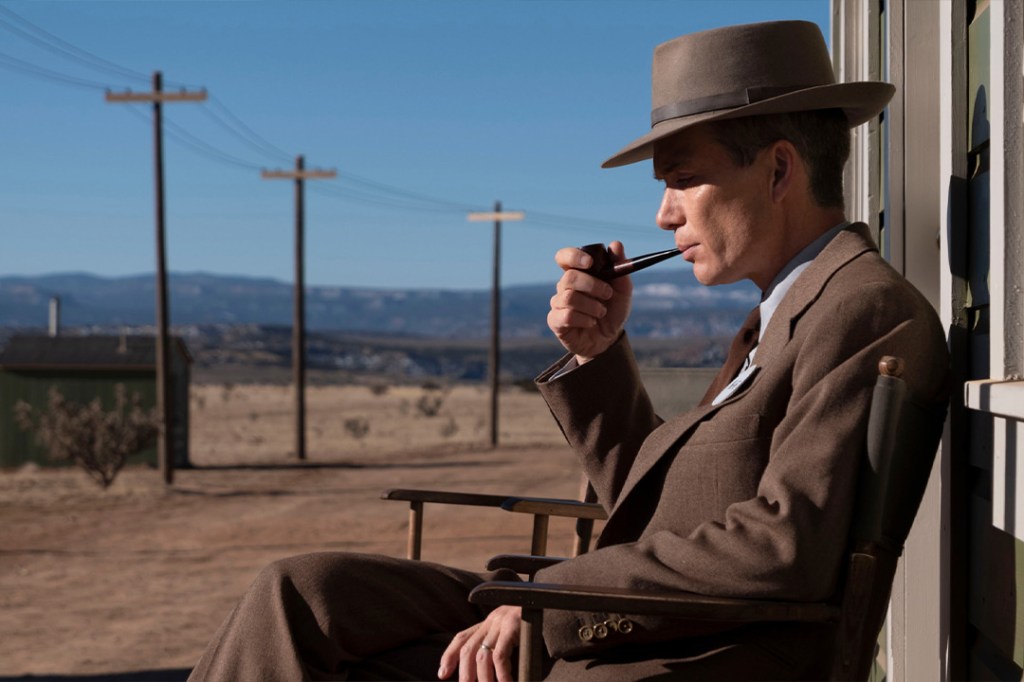
1 | Oppenheimer
It’s only fitting that the biopic of the man who brought the most important scientific achievement of the 20th century to fruition be constructed with the same care and focus on perfection. Bringing together a stellar cast, a time-bending script, and large format cinematography, Christopher Nolan tells the story of Oppenheimer in a way that only he could, on the largest screens imaginable. In a year of event cinema, there was, quite literally, no bigger screen than those Oppenheimer played on. Pure blockbuster magic with an arthouse heart, the film could show a historical recreation of Los Alamos as well as the inner turmoil and guilt of its leader equally well. All tied up with a haunting ending that asks of the true legacy of J. Robert Oppenheimer, saving its most chilling moment for its finale. A perfect filmic experience. – N.A.
It is quite staggering to think that we are at a point in American cinema where a blockbuster, a film that grossed well over a billion dollars, can forthrightly argue that the bombings of Hiroshima and Nagasaki were in fact an unforgivable atrocity – and then receive little-to-no pushback whatsoever from the viewing public. This unprecedented political statement is coupled with a boundary-pushing exercise in film style, one that takes the propulsion and pulsating rhythm of Nolan’s Dark Knight/Inception-era material and pairs it with the abstract visuals and instinctive editing of Terrence Malick. The result is something that I can really only honestly describe as a radical step forward for big-budget moviemaking, one that proves most industrial preconceptions about the general audience to be flatly incorrect. All of that aside, it’s just a damn great movie – cast to the gills with character actors giving every line their all and photographed like Nolan had one last chance to make the film he always dreamed of. – R.J.
Christopher Nolan has finally made his masterpiece. An epic, sprawling historic epic to rival the best works of David Lean, Oppenheimer is not only the best film of 2023 but perhaps the best film of the 21st century. I can think of no film more politically and culturally important at this moment than Nolan’s latest. Anchored by a stunning performance from Cillian Murphy, Oppenheimer reminds audiences of the tremendous cost of war and the dangers that lay ahead. No film this or any recent year has so successfully conveyed such a harrowing and important piece of history as effectively as this film. – C.W.
It is a common impulse since the advent of the cinema that the art form is if not dead, in a continual state of decay. Theatrical grosses certainly tell this story dollar by dollar year by year. While Avatar: The Way of Water, and to a lesser extent, Top Gun: Maverick, repudiated such a notion of audience neglect of filmic storytelling, it is not until Oppenheimer that this viewer faced a reckoning with their condescension of the modern audience. It is a feat that brings continuity to the great epics of the ‘60s like Lawrence of Arabia which was feted by audience and critic alike. Art and entertainment are not mutually exclusive endeavors; neither are integrity and box-office windfall. The future of the theatrical experience survives another unforgiving generation. – J.S.
 Scrawls on Cinema Blog